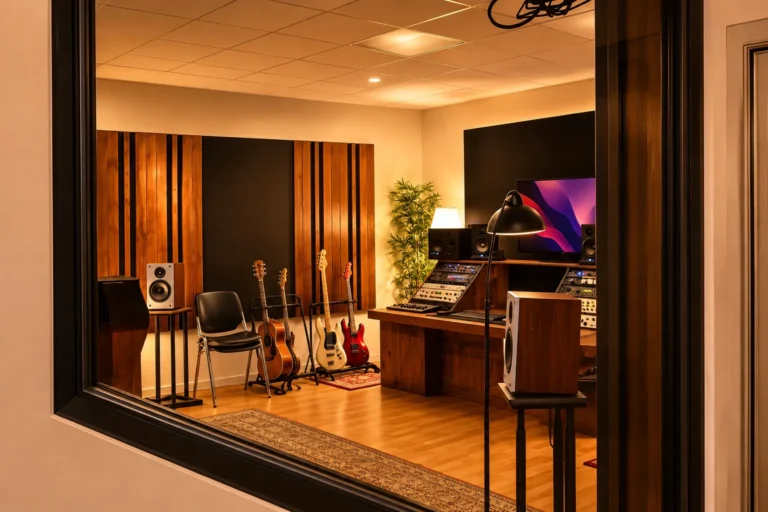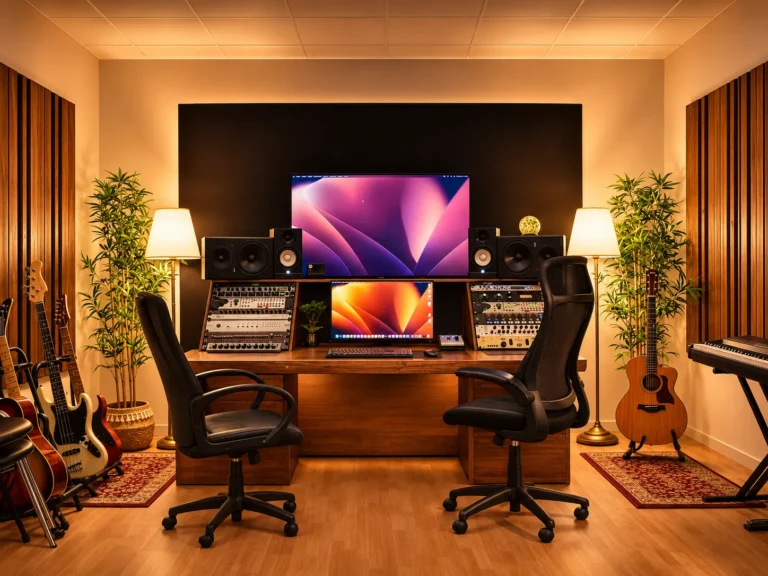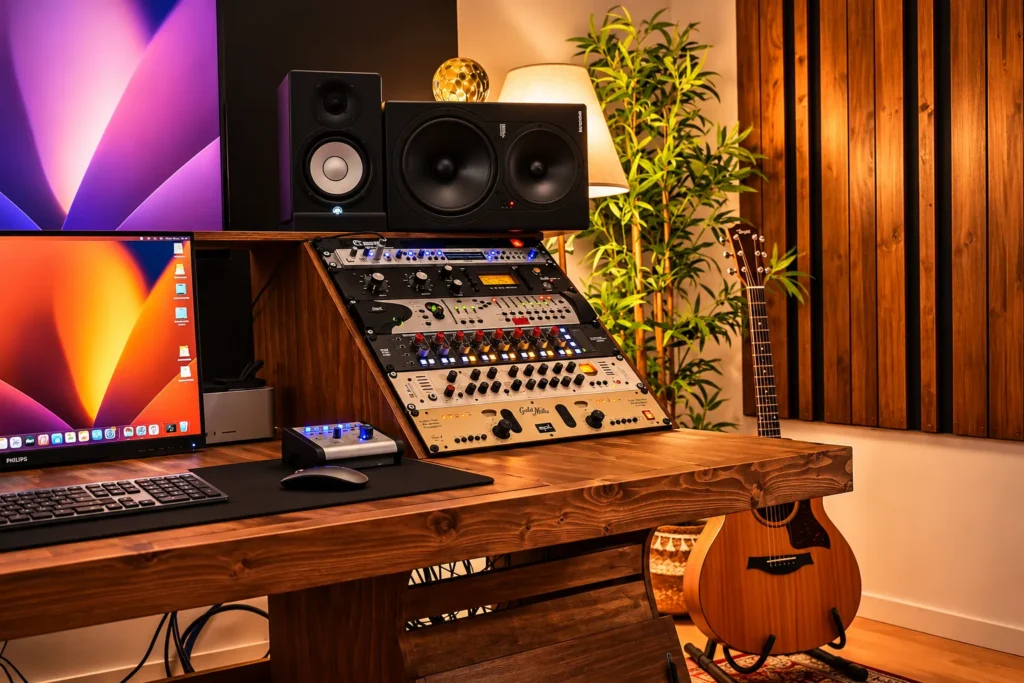
A strong guitar take can stop fitting once the bass, drums and vocals join in. If you kept a clean direct signal, you can revisit the amplifier sound without playing that performance again. This is what reamping makes possible. Nimora offers guitar and bass reamping; this guide helps you decide when to discuss it with the studio.
What reamping a guitar means
The process starts with a recorded performance: that signal is sent to an amplifier and the new result is recorded. The direct track, or DI, keeps the performance without committing the amplifier sound. This lets you explore different settings while keeping the same take. For an explanation of the process, see Radial’s guide to reamping.
When it is worth considering
Imagine a chorus with two guitars: they sound huge on their own, but the riff becomes hard to follow when the vocal comes in. Before simply asking for “more guitar”, listen to the role each part should play. A less dense texture or a more defined attack might help. A DI lets you explore another tonal direction while keeping the performance you liked.
It is also useful when you recorded a take you want to keep before deciding on the character of the song. You do not have to replace the original sound: send it as a reference and explain what works and what you would like to explore.
What to check before sending the take
- Make sure it is a DI: a distorted guitar exported without reverb still contains the recorded distortion. Find the original direct signal.
- Choose the performance: label which take belongs to each part and keep an unedited copy.
- Keep beginnings and endings: listen through the complete files and check their alignment with the song.
- Explain the goal: describe the guitar’s role and include a specific reference without expecting an exact copy of another record.
For file names, formats and a shared start point, follow our guide to sending tracks for mixing. If you are unsure whether your file is suitable, ask before exporting the whole project.
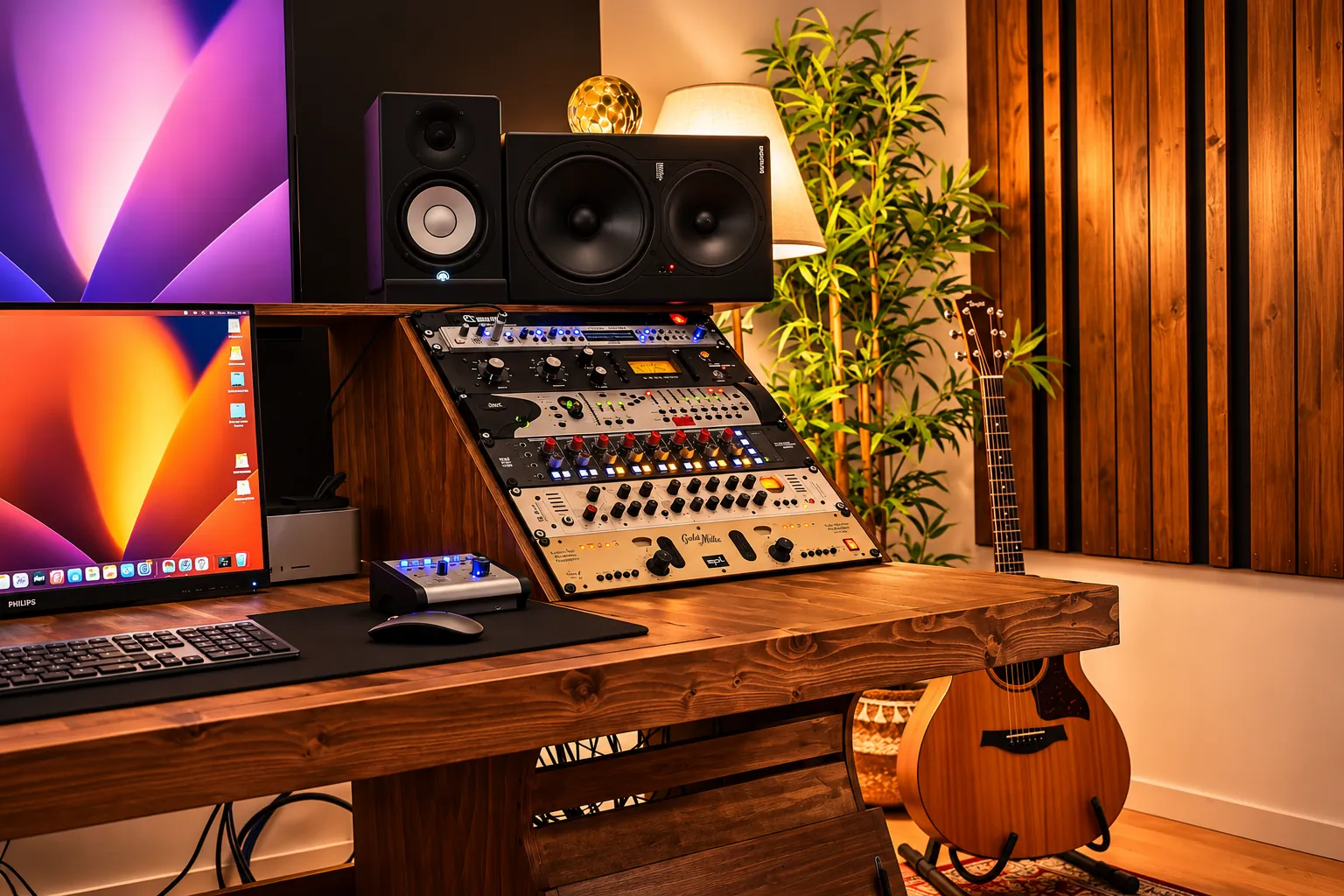
What to agree with the studio
Send a rough mix and a short note: “The chorus rhythm guitar should support the vocal; we want to keep its energy but hear the notes more clearly.” This gives more useful direction than a list of equipment. Ask what the engineer needs and agree the scope before booking. Do not assume reamping is included in every mixing quote.
What if you only have the processed guitar?
Keep that file and explain how you recorded it. Do not label it as a DI or delete the original session. The studio can assess the options using the material you actually have; changing the sound is no substitute for choosing a suitable performance.
If you are looking for a recording studio in Valencia to work on your guitars, Nimora can discuss the sound and the material you already have. Tell us about your project before preparing the session.